Energesis is testing the waters for a Regulation Crowdfunding offering on BioTech Funding Portal. Learn more →
Pipeline
Programs centered on adipocyte-mediated energy expenditure
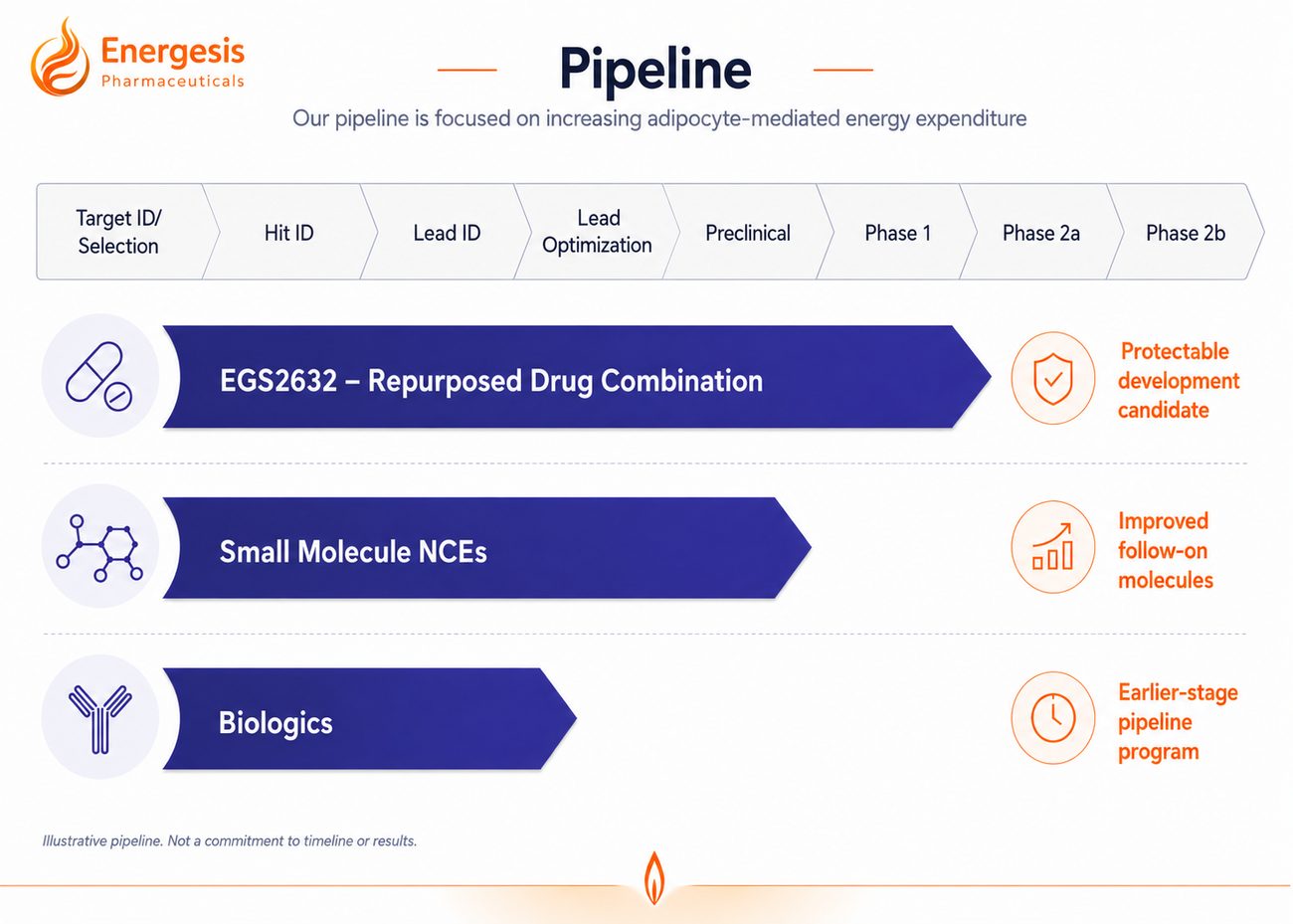
Energesis’ pipeline includes a repurposed drug combination, follow-on small molecule candidates, and earlier-stage biologics.
| Program | Modality | Route | Furthest development | Completed |
|---|---|---|---|---|
| EGS-2632 Obesity · Proprietary oral combination of two previously approved drugs | Small molecule (repurposed combination) | Oral | Preclinical | Preclinical studies in diet-induced obesity mouse models demonstrating statistically and clinically significant body weight reduction, fat-selective weight loss, lean mass preservation, increased BAT-mediated energy expenditure, and synergistic efficacy with marketed GLP-1 agents. |
| Small Molecule NCEs Obesity · Novel small molecule compounds identified via proprietary human brown fat discovery platform | Small molecule (novel chemical entities) | Oral | Lead Optimization | Novel target identified, lead compound selected with convincing in vivo data set, currently optimizing lead of follow-on compounds. |
| Biologics Program Obesity / metabolic disease · Earlier-stage biologics targeting adipocyte-mediated energy expenditure | Biologic | Injectable | Target ID / Early Discovery | Earlier-stage program, target identified, convincing in vivo data set, developing improved compounds. |
Lead program
EGS-2632: a proprietary oral combination candidate
EGS-2632 is Energesis’ lead product candidate. It is a proprietary oral combination of two previously approved drugs being developed for obesity.
In studies using the workhorse small animal model of obesity, the diet-induced obese mouse, EGS-2632 produced statistically and clinically significant body weight reduction. This weight loss comes entirely from fat, with complete preservation of lean mass.
Both components have established safety records at their approved doses. In EGS-2632 they are used together at only a fraction of those doses. Neither drug significantly affects body weight alone; however, together they act synergistically.
Preclinical data
What the animal studies show
Energesis’ preclinical efficacy and mechanism-of-action studies show that EGS-2632 increases energy expenditure through increased brown fat mass. (EGS-2632 combines EGS-2026 and EGS-2032). Select a chart to enlarge it.
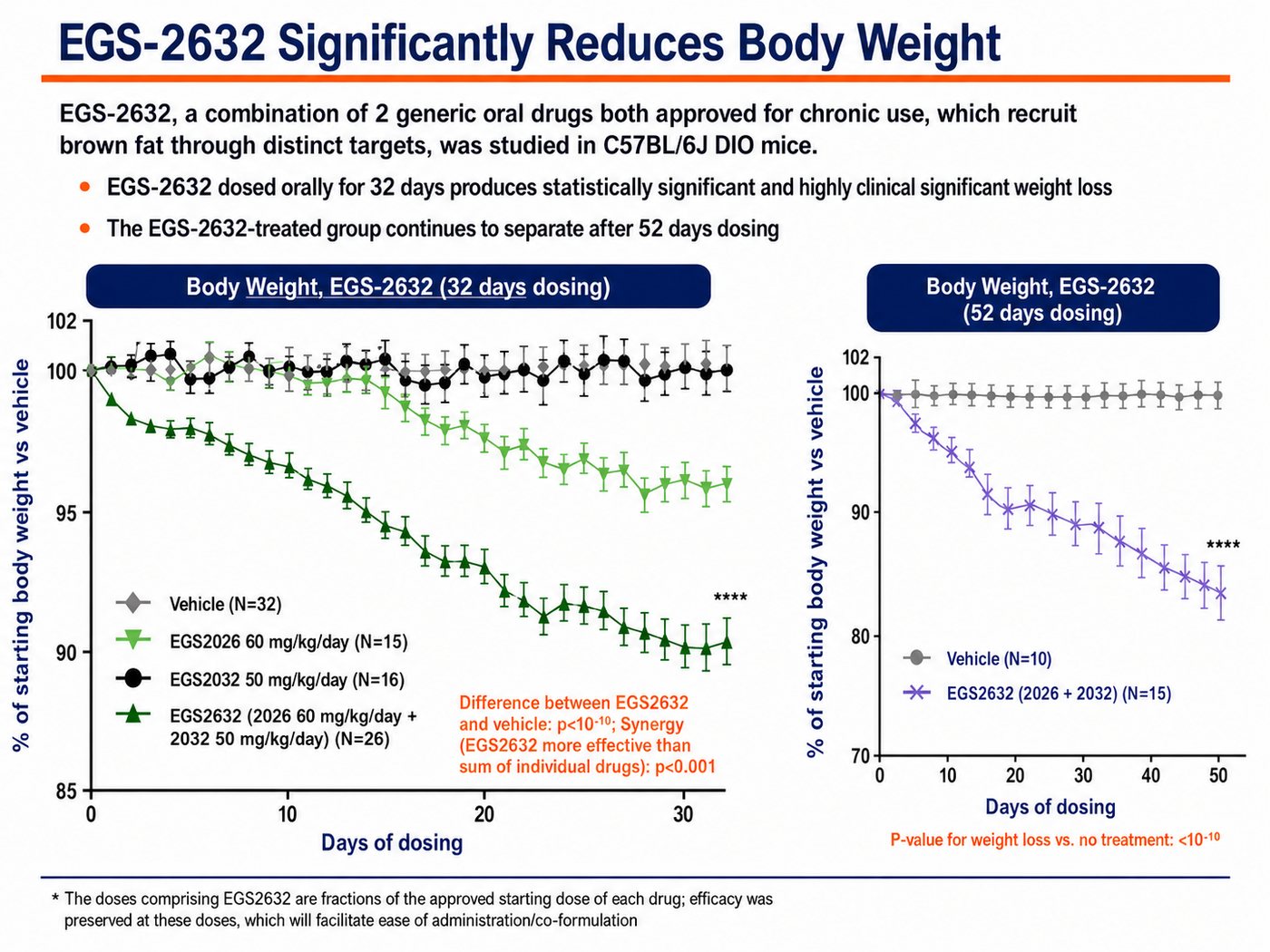
Body weight: statistically and clinically significant weight loss after 32 days of oral dosing, with separation continuing through 52 days.
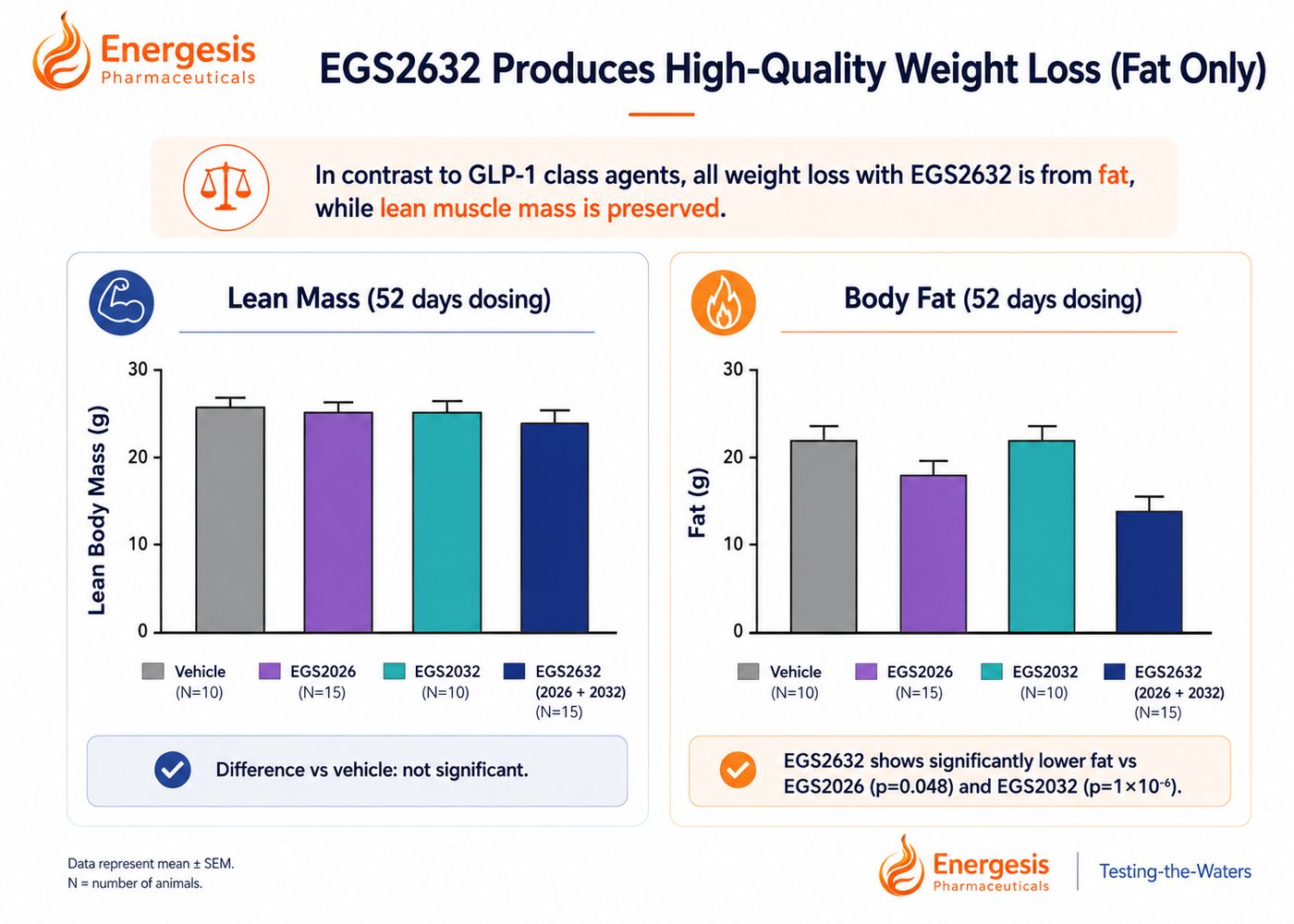
Quality of weight loss: all weight lost came from fat, while lean muscle mass was preserved.
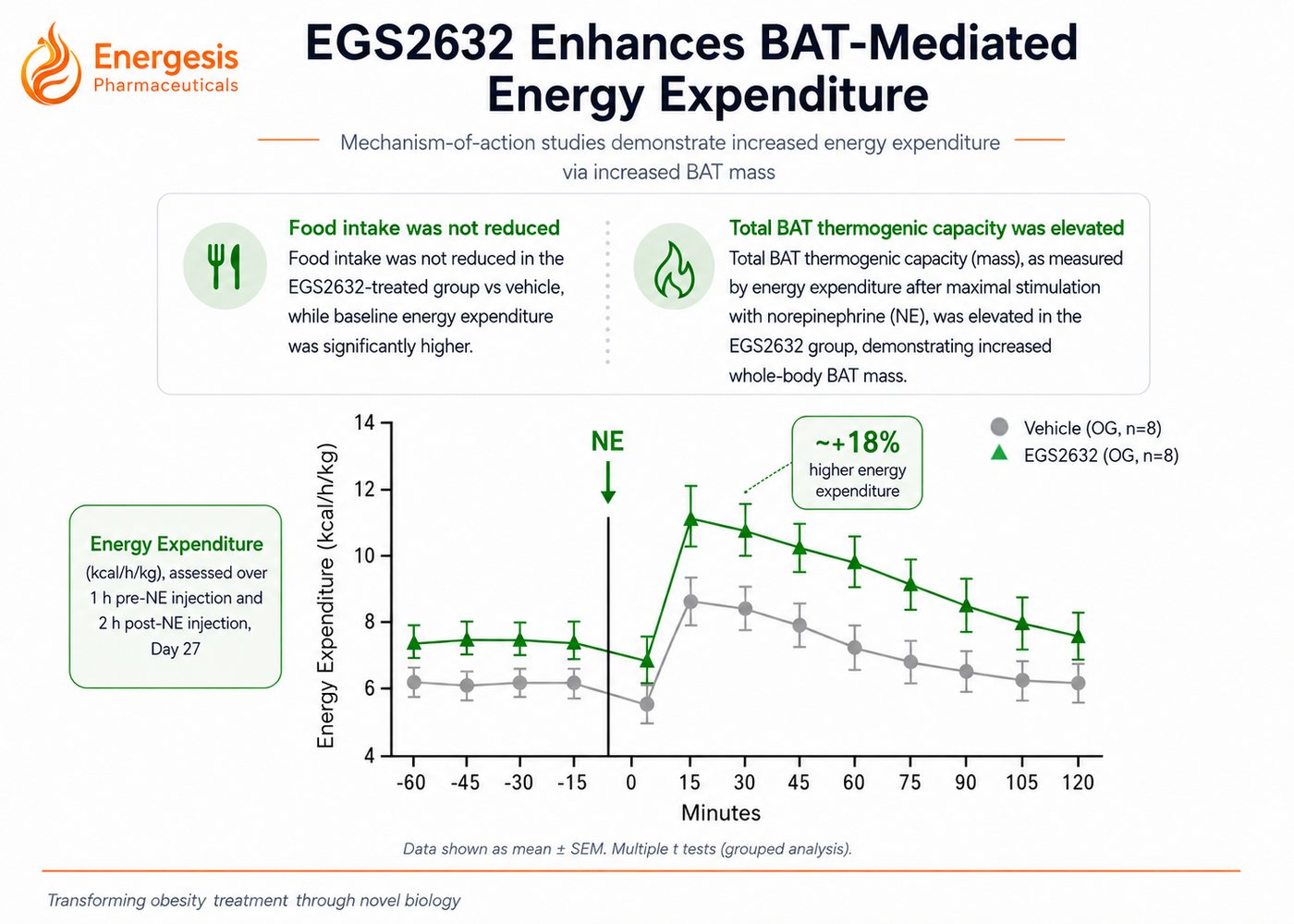
Mechanism: food intake was not reduced; total brown fat thermogenic capacity was elevated.
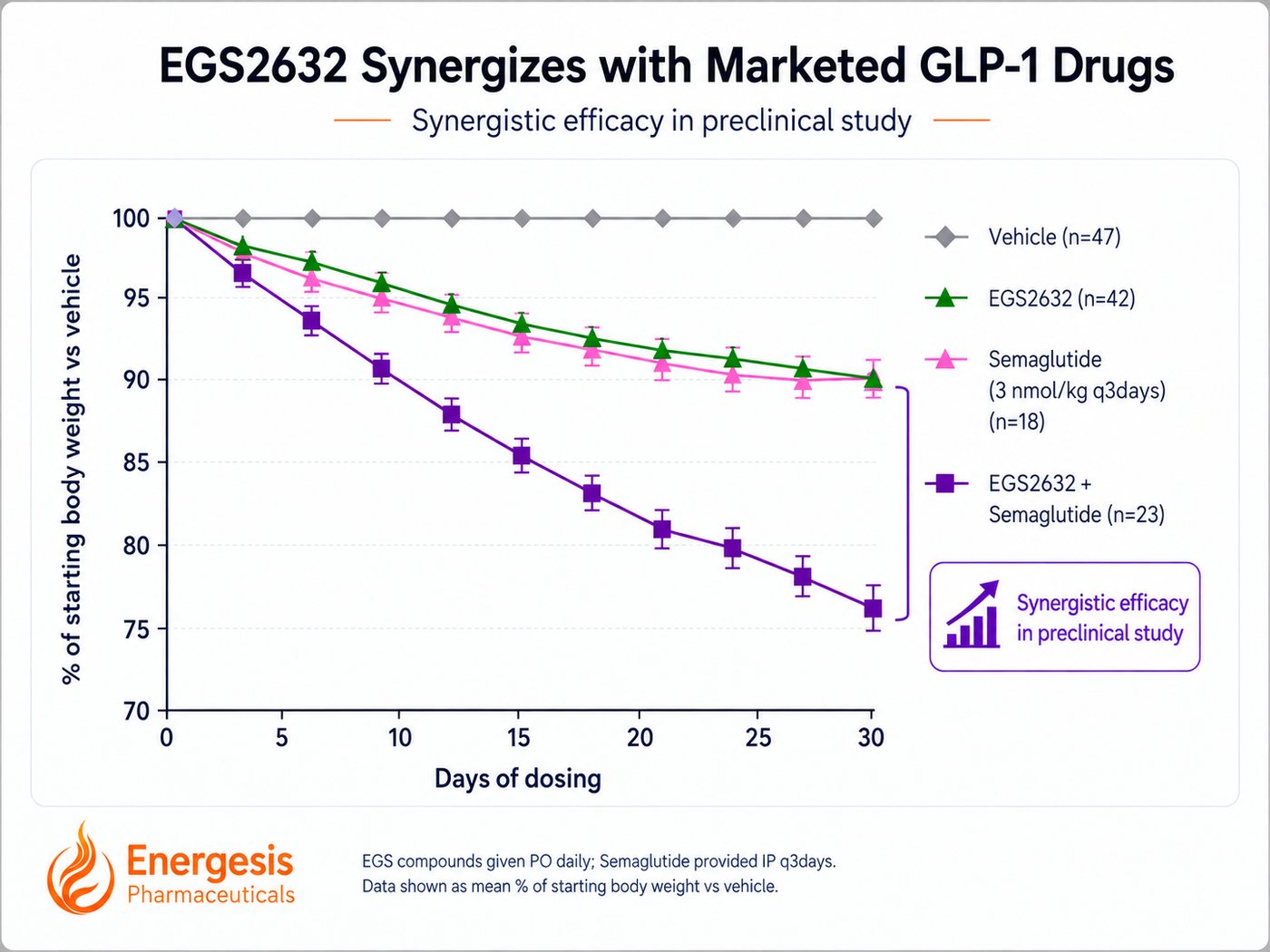
With GLP-1s: synergistic efficacy with marketed GLP-1 drugs in a preclinical study.
Preclinical data note: Animal data may not translate to human efficacy or safety. Additional studies are required.
Combination potential
Potential complement to GLP-1 therapies
We do not view GLP-1 drugs as competitive. Because GLP-1s act on energy intake, an energy expenditure therapy could potentially be used as an adjunctive or sequential treatment strategy.
In preclinical studies, EGS-2632 showed synergistic efficacy when combined with marketed GLP-1 agents. We believe this may support future development as a combination approach, GLP-1 dose-sparing strategy, or weight maintenance option.
Combination Therapy
Potential use alongside GLP-1 therapies to improve total weight loss or support fat-selective outcomes.
GLP-1 Intolerant Patients
Potential use in patients who cannot tolerate or remain on incretin therapies.
Maintenance Therapy
Potential long-term oral strategy after initial weight loss to support weight maintenance and prevent weight regain.
Combination potential
Beyond appetite suppression
We believe the future of obesity care will require therapies that do more than suppress appetite. By targeting brown fat recruitment and energy expenditure, we are pursuing an approach intended to support fat-selective weight loss, preserve lean mass, and work alongside GLP-1 therapies.
- Oral lead candidate strategy
- Designed to increase energy expenditure without reducing food intake
- Potential to preserve lean mass based on preclinical studies
- Potential adjunctive use with GLP-1 therapies based on preclinical data
- Small molecule approach with straightforward, easily scalable manufacturing potential
Regulatory pathway
Planned path toward human translation
We are developing our assets for obesity. We intend to perform a validation study of EGS-2632 in obese non-human primates.
Subsequently, we plan to perform a pilot human study ex-U.S., and then incorporate this safety data into an IND submission to the FDA. We expect to partly use the 505(b)(2) pathway, which may allow reliance on prior FDA safety findings for one component, published safety literature for the second component, and targeted original clinical studies for the combination.
Preclinical Stage
Where we are today
NHP Validation Study
Obese non-human primates
Ex-U.S. Human Study
Pilot safety and efficacy study
Future FDA IND
Potential 505(b)(2) pathway
Energesis’ programs, including EGS-2632, are currently in preclinical development. They have been evaluated only in laboratory and animal models and have not yet been tested in humans. They are not approved by any regulatory authority, and preclinical results may not predict human safety or efficacy.